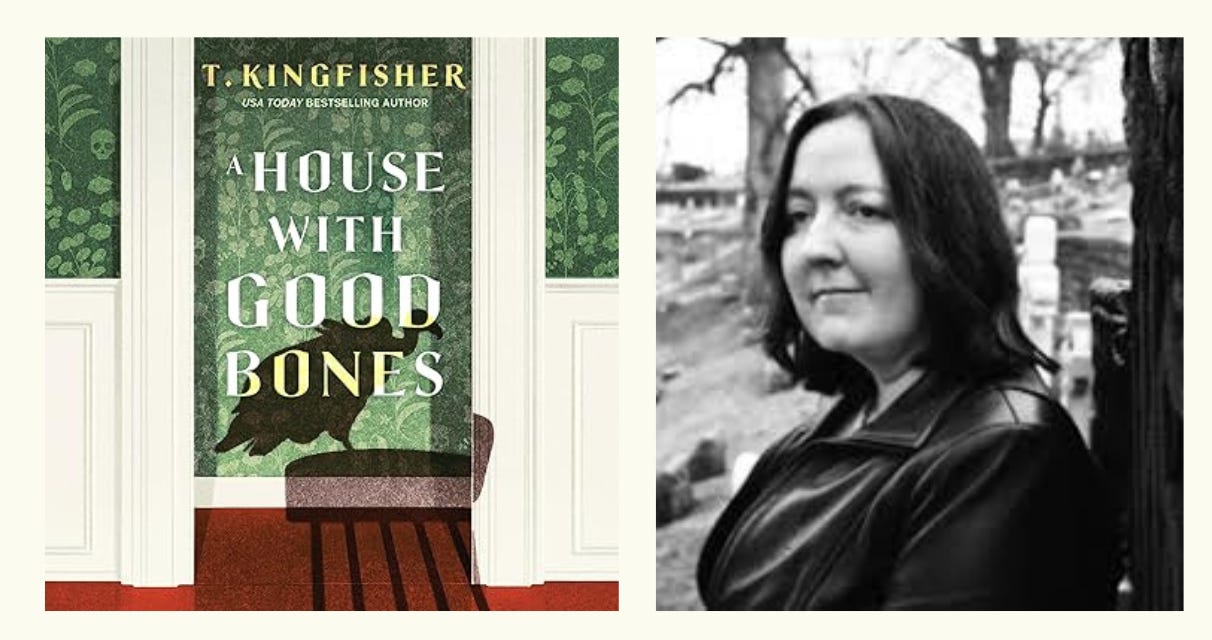
A House With Good Bones by T. Kingfisher.
An Ink-Stained Desk Book Review.

Thanks to everyone who has recently subscribed to The Ink-Stained Desk. If you enjoy this free publication, consider supporting my work through the ‘Buy Me A Coffee’ button. A small amount goes a long way in supporting my writing.
I also publish SubStack’s The Link Drop, where each Sunday I curate 5-10 links to thought-provoking articles, spanning diverse topics and including a weekly gem from JSTOR. Never politics or celebrity culture, consider it your antidote to the endless social media scroll, offering substance and sparking curiosity. If this sounds like it might add value to your week, head over and take a look around.
Welcome to an Ink-Stained Desk book review,
I’ve said it before, and I’ll say it again: it’s hard to say how T. Kingfisher does it, but her books consistently sweep up awards, and her 2023 Dragon Award and 2024 Locus Award for Best Horror Novel for A House with Good Bones are no exception. This cozy southern gothic horror novel masterfully pulls a quirky and genuinely likable protagonist back into the clutches of family drama she thought was long buried. It cleverly nudges the reader to ponder questions about inherited history, the subtle cruelties of polite society, and, in its own roundabout way, the thorny ethics of scientific pursuit.
"The problem with family is that they know where all the levers are that make you move. They’re usually the ones who installed the levers in the first place."
The Plot.
Our journey begins with Sam Montgomery, an archaeoentomologist (yes, apparently a real job, and a fascinating one at that!), whose latest dig is unexpectedly put on hold, leaving her temporarily without a roof over her head. Her only option? A reluctant return to her childhood home in rural North Carolina, a place steeped in unhappy memories. Sam’s grandmother, Grama Mae, may be twenty years in the grave, but the time that has passed has done little to erase the trauma inflicted by a ‘tough-love’ matriarch whose overbearing presence, often menacing demeanour, and acerbic tongue still echo in Sam's mind. Grama Mae’s chilling threats of the ‘underground children’ resurface as Sam attempts to navigate her past.
Upon arriving back at the house, Sam immediately notices her mother is ‘not quite right,’ sparking a worry about early-onset dementia. However, as the layers of the narrative begin to peel back, it becomes chillingly clear that all is far from what it seems. Sam’s family tree, she soon discovers, holds dark, unsettling secrets deeply rooted in its very foundations.
Highlights.
There was so much to truly appreciate about this book. The narrative hits every note you’d expect from a compelling Southern Gothic horror story: the oppressive charm of southern hospitality, intensely creepy house vibes, generations-old family secrets, and a generous sprinkling of bizarre local flora and fauna that add to the pervasive unease.
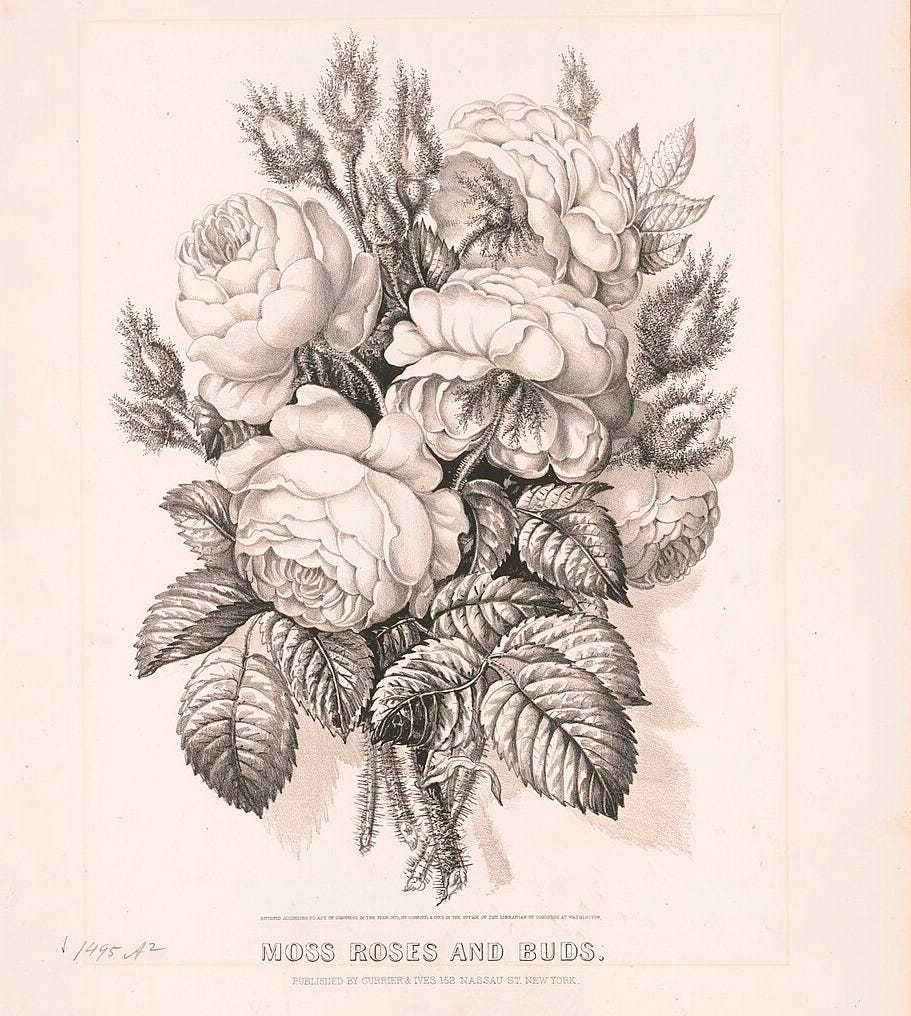
What particularly captivated me was Kingfisher's ingenious subversion of the ubiquitous rose symbol. Forget your mother's delicate, romantic blooms; these are not those roses. As Kingfisher herself reveals in the acknowledgments, the idea for the book sprouted from her own complicated love-hate relationship with tending rose bushes. Each section of the novel is cleverly introduced by an epigraph featuring fascinating facts about different rose breeds, offering the reader subtle yet intriguing hints about the unfolding plot.
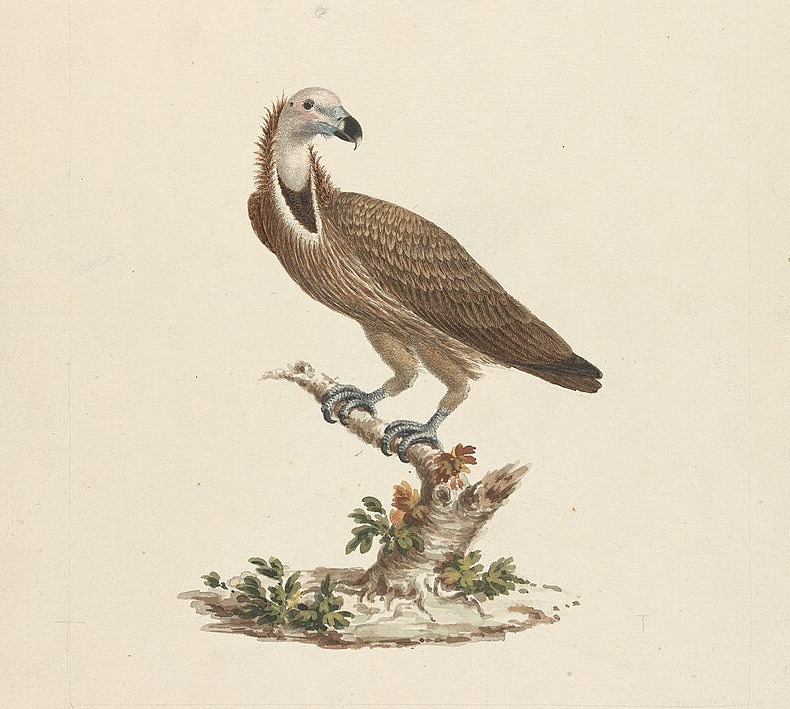
The novel’s pervasive insect and bird life also deserves a special mention. Vultures are present from the very first scene, appearing sporadically throughout the story, always maintaining a watchful, unsettling vigil over the Montgomery home. We are also introduced to swarming ladybugs, which, against all expectations, manage to be unexpectedly and remarkably creepy.
Our main character, Sam, stands out as another significant positive in this story. Sam herself is the first to tell readers that she has always felt like an outsider in her hometown, constantly reflecting on past incidents to prove her point. However, all of her self-proclaimed quirks and perceived faults ultimately transform into invaluable assets as the novel progresses, proving her resilience and intelligence in ways that make her all the more endearing.

Drawbacks.
T. Kingfisher’s horror books often lean into the 'cozy horror' genre, which typically includes frequent doses of wry humour and sarcasm. In A House with Good Bones, this comedic element is predominantly delivered through Sam's internal monologue. Unfortunately, I found that this humour often missed its mark, leading to moments that felt genuinely cringeworthy and uncomfortable in a way that pulled me out of the horror, rather than enhancing it. It sometimes felt like an intentional comedic beat that interrupted the building tension.
Another aspect that warranted a closer look was the attempt at a romance subplot between Sam and her mother’s handyman, Phil. While there was a clear effort at a ‘meet-cute’ early in the novel, and several subsequent misunderstandings designed to foster romantic tension, these moments consistently fell flat for me. The romantic thread felt too deliberate and almost forced, as if Kingfisher felt obligated to include some form of romantic interest regardless of whether the plot truly needed it or if the chemistry naturally developed.
The Final Take.
Despite these few drawbacks, I genuinely enjoyed A House with Good Bones and, in fact, devoured it in a single sitting. The writing flows with effortless ease, drawing you into its unsettling world, and the characters, especially Sam, are incredibly relatable. Anyone who appreciated the unique blend of dread and charm in T. Kingfisher’s The Twisted Ones will undoubtedly find much to love here.
And for those who brave it to the gruesome, satisfying end, you might even be tickled by the dedication to T. Kingfisher’s grandmother, “who was actually pretty awesome.”
Until next time, have a very bookish day,
C M Reid at The Ink-Stained Desk.