Straddling The Line
From The Archive: Thematic Essays.

This article, and all my work, is made possible by the incredible generosity of my paid subscribers. Your support is particularly important for longer projects such as The Genre Genealogy Series, which I intend to continue offering for free to everyone. If you enjoy my writing and would like to support me in continuing to produce in-depth content, consider joining our community as a paid subscriber.
Prefer to offer one-time support? I have a ‘Buy Me A Coffee’ site here.
Okay, so John Green's new book, Everything is Tuberculosis (—fantastic title, by the way, even if it makes me want to cough), has really got me thinking lately about these writers, these incredible minds, who aren’t content to just live in the realm of make-believe. They’re out there in the real world, too, dissecting it, analysing it, and sharing those insights with us.
Perhaps it shouldn’t be surprising. After all, the urge to write and to explore ideas through language is a powerful one. It’s almost a given that those who master the art of crafting narratives would also be drawn to dissecting and understanding the world around them in a more direct way.
It actually makes perfect sense. Think about what goes into creating a compelling fictional world. You need to understand people – their messy motivations, their hidden desires, the whole tangled web of human nature. You’re constantly observing societal norms, the unspoken rules, and the power structures that shape our lives. And let’s be honest, most of us writers are professional-level rabbit hole enthusiasts. We stumble upon a random fact, and suddenly, we’re three hours deep in the history of Victorian plumbing. All that digging, all that understanding… it doesn’t just vanish when we step away from our fictional characters. It bleeds over.
So, this Friday from The Ink-Stained Desk, that’s exactly what I want to explore. I’ve been diving into the work of a few different authors (—and knowing my own magpie tendencies, “a few” might be a generous understatement) who beautifully straddle that line between the imagined and the real. What do these literary chameleons turn their analytical gaze toward when they’re not building fictional worlds? Many write about the craft itself, but a far greater number delve into pretty much everything under the sun.
Writers Who Straddle The Line.
(—Where possible and not hidden behind a paywall, I have linked to essays by the authors.)
Margaret Atwood:
Best known for The Handmaid’s Tale and The MaddAddam Trilogy, Margaret Atwood is also a prolific educator and non-fiction writer. She has a list of more than ten non-fiction writing craft works up her sleeve, my favourite being Negotiating with the Dead, which is now titled On Writers and Writing (—I honestly like the original title better). Atwood has also contributed countless critical essays and articles to publications such as The New York Times Book Review, The Washington Post, and The Harvard Educational Review. She belongs in both the writers writing about writing and writers writing about everything else camps as she has also written about debt and wealth.
Attwood has a wonderful Substack called In the Writing Burrow that you can find here.
Her most recent essay collection was released in 2022, Burning Questions: Essays and Occasional Pieces, 2004 to 2022, which contains keynote speeches, musings and ‘occasional pieces’ (as Attwood herself describes them). This is an important collection (in my humble opinion) and tackles the big topics of climate change, democracy, wealth distribution, and so much more. If you get your hands on this book but are short of time, just do me a favour and read —
Five Visits to the Word-Hoard
Caught in Time’s Current
We Lost Ursula Le Guin When We Needed Her Most
For a list of Margaret Atwood’s complete works, fiction and non-fiction, visit https://margaretatwood.ca/full-bibliography-2/
She has also just released a memoir, Book of Lives: A Memoir of Sorts, which I got my hands on a few weeks ago and intended to begin over the Easter break, although that may be sooner, judging from the way it has been staring at me from my bedside table.
J.R.R. Tolkien:
J.R.R Tolkien, besides writing The Lord of the Rings, fluently spoke over ten languages (translating many old and Middle English poetry), and was part of the literary group The Inklings (—do groups like this still exist, because someone send me an invite please!). He wrote many critical essays and reviews and delivered lectures on various topics. Tolkien’s lecture ‘On Fairy-Stories’ is still considered one of the foundation texts of both modern fantasy literature and fantasy criticism and scholarship.
On Fairy-Stories (1939) defines fantasy and fairy tales, including Tolkien’s ideas of sub-creation, recovery, escape, and consolation.
A Secret Vice: (1930) Tolkien's thoughts on the creation and enjoyment of invented languages, a crucial aspect of his work.
A Middle English Vocabulary: For ultimate devotees, Tolkien put together what is essentially a glossary that translates Middle English to English for all your ‘reading in the original’ needs.
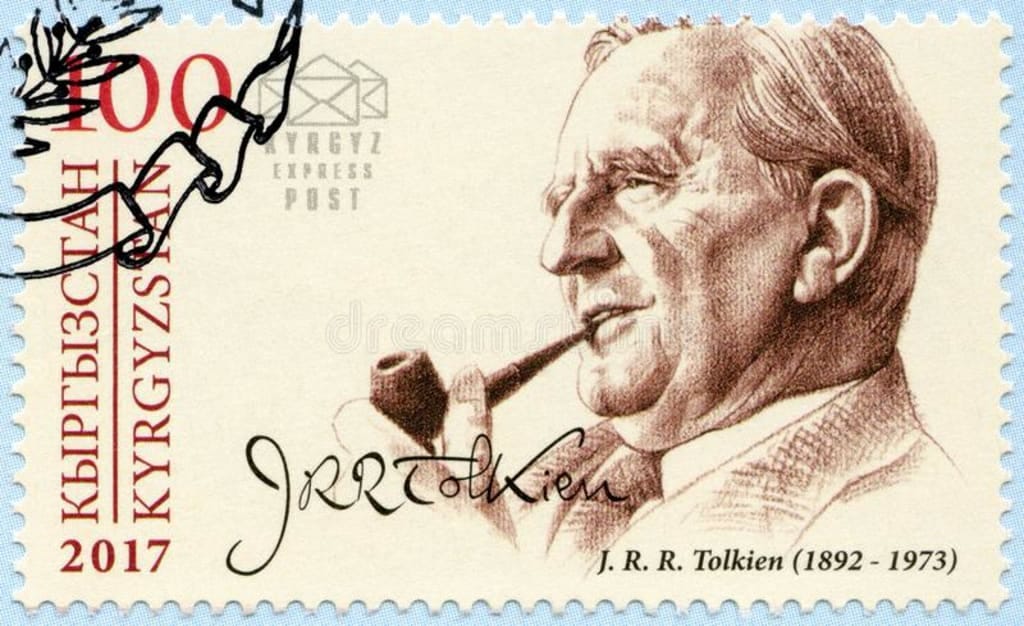
J. R. R. Tolkien stamp used in Kyrgyzstan. Source.
Virginia Woolf:
Not only a talented fiction writer who spent her life attempting to create prose that read like poetry, but she was also a prolific diarist, reviewer, and essayist. I must say that her diaries are a joy to read and give a really good picture of life in the late 19th to early 20th century. In these, she writes about her day-to-day life, but also the goings-on of the Bloomsbury Group, and her often scathing but insightful commentary is without equal. (— Yes, I know her diaries are technically not ‘non-fiction’, or are they?)
Two of my favourite snarky comments that I have underlined in my personal copy.
( —Her comments on James Joyce’s Ulysses are also hilarious. A quick search of the internet will list these for you; I promise it’s worth the time!)
“Pale, marmoreal [T.S.] Eliot was there last week, like a chapped office boy on a high stool, with a cold in his head, until he warms a little, which he did.”
— From a diary entry, February 16, 1921.
(speaking about Katherine Mansfield)
“I shall have to accept the fact, I’m afraid, that her mind is a very thin soil, laid an inch or two deep upon very barren rock… She writes badly too.”
— From a diary entry, August 7, 1918.
Beyond her diaries, though, Virginia Woolf also presented her famous lecture series, A Room of One’s Own, and many other non-fiction works.
The Common Reader (1925): This seminal collection established Woolf as a perceptive and engaging literary critic for a broader audience. It includes essays such as: ‘Jane Eyre’ and ‘Wuthering Heights’, ‘The Modern Essay’, ‘Jane Austen’ and ‘Modern Fiction’ (though initially published earlier, it's a cornerstone of this collection)
The Common Reader: Second Series (1932): Continuing in the vein of the first, this volume offers further explorations of literature and biography. This collection includes the very important and influential piece, ‘How Should One Read a Book?’
A Room of One's Own (1929): Based on lectures delivered at women's colleges at Cambridge University, it is a foundational text of feminist literary criticism. Woolf argued for the necessity of financial independence and ‘a room of one’s own’ to allow women the space to write.
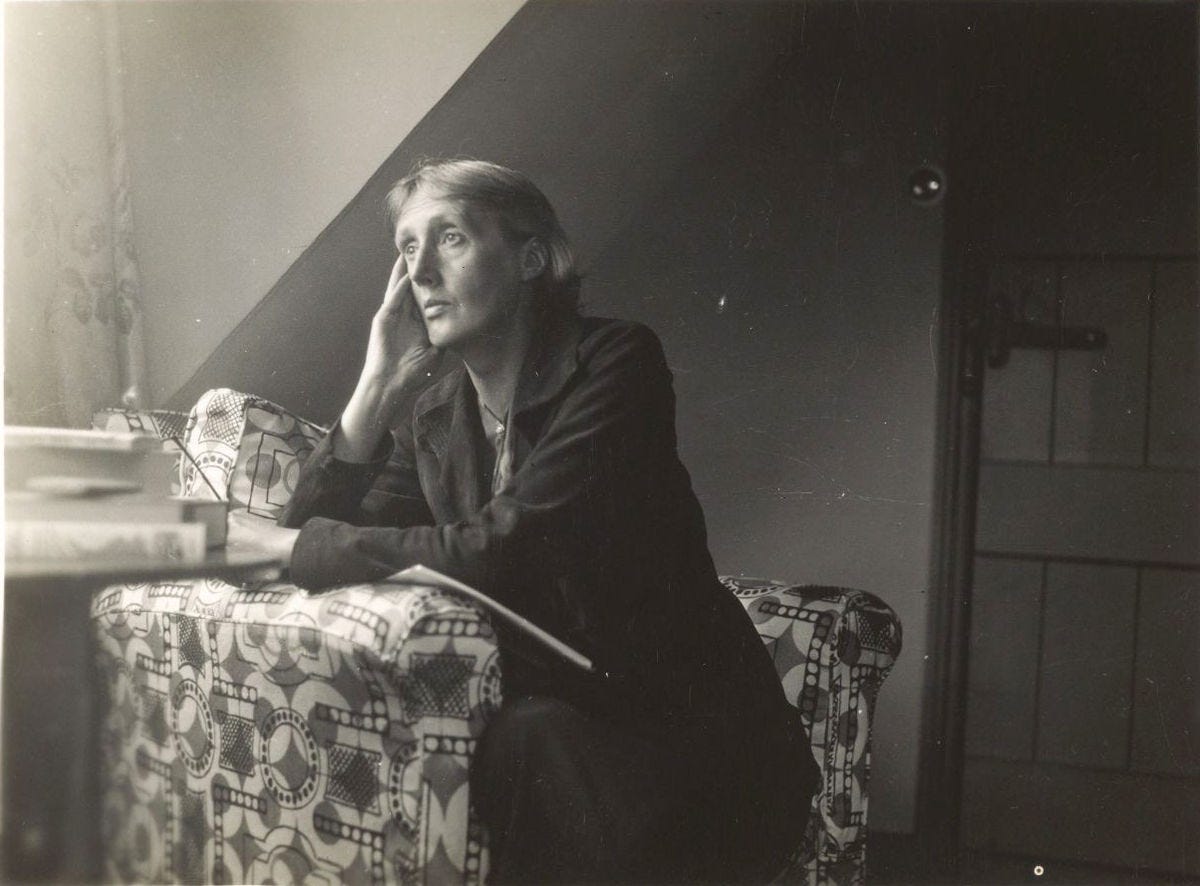
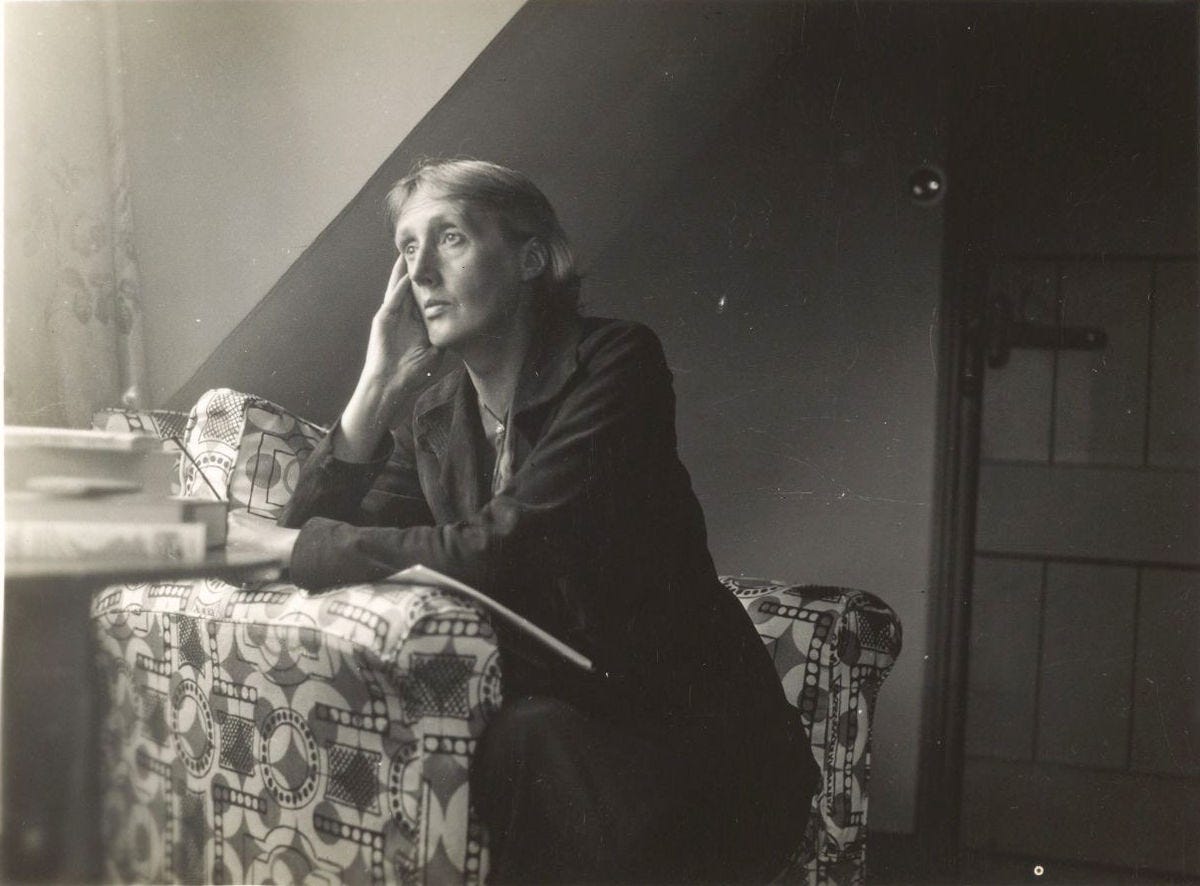
Virginia Woolf at Monk's house. Source.

Stephen King:
One of the biggest names in horror and fantasy literature, many do not know that King is a huge fan of popular culture. Many, if not all, of his fiction books contain pop culture references of the time. I’m a particular fan of his books that have song lyrics at the beginning of chapters that do the job of setting the tone for the reader. (—I should put these together in a playlist; you may be witnessing the unlocking of a new side mission.)
It should also be noted that King is also a member of a little-known charity band, The Rock Bottom Remainders, along with fellow authors Matt Groening, James McBride, and Mitch Albom.
Danse Macabre (1981)(more recent additions have updated cultural references): Following his pop culture leanings, King wrote a book, following pop culture, focusing specifically on horror because he is King, throughout history.
On Writing: A Memoir of the Craft (2000): King also put together his thoughts on writing, including practical advice and musing on his own experiences in the writing and publishing industry.
John Green:
The reason I’m sitting here right now writing this article.
John Green is currently touring his latest non-fiction book. The author of Looking for Alaska and The Fault in Our Stars is proving that he is not only a fiction writer but is also capable of some serious research and introspection. I highly recommend John Green’s YouTube channel ‘Vlogbrothers’ that he hosts with his younger brother Hank. The brothers explain everything from world history to politics.
Everything Is Tuberculosis: The History and Persistence of Our Deadliest Infection (2025): This book, which was just released, explores the history, science, and social impact of tuberculosis, weaving together the story of a young patient in Sierra Leone with the broader history of the disease.
The Anthropocene Reviewed: Essays on a Human-Centred Planet (2021): This is a collection of personal essays adapted and expanded from his popular podcast of the same name.
I hope you have a wonderful weekend filled with books that surprise you.
Next Friday, I will be taking some time off to catch up on university readings, writing assignments and preparing some new articles for you all, but I will return the second Friday of April, and I hope to see you then,
C M Reid at The Ink-Stained Desk.
Great post! On writing by Stephen King is on my shortlist for the year! It’s taken a long time for me to realize almost all my favorite authors are doing so much more than just writing fictions!